Retinal Disease in Dogs and Cats
Retinal disease in pets can lead to partial or complete vision loss, sometimes very suddenly. Because many retinal conditions are painless, changes in vision may be the first and only sign something is wrong. At the Veterinary Eye Center – Connecticut, our doctors provide advanced diagnostic testing and specialized care for pets affected by retinal disease.
Explore VEC CT Care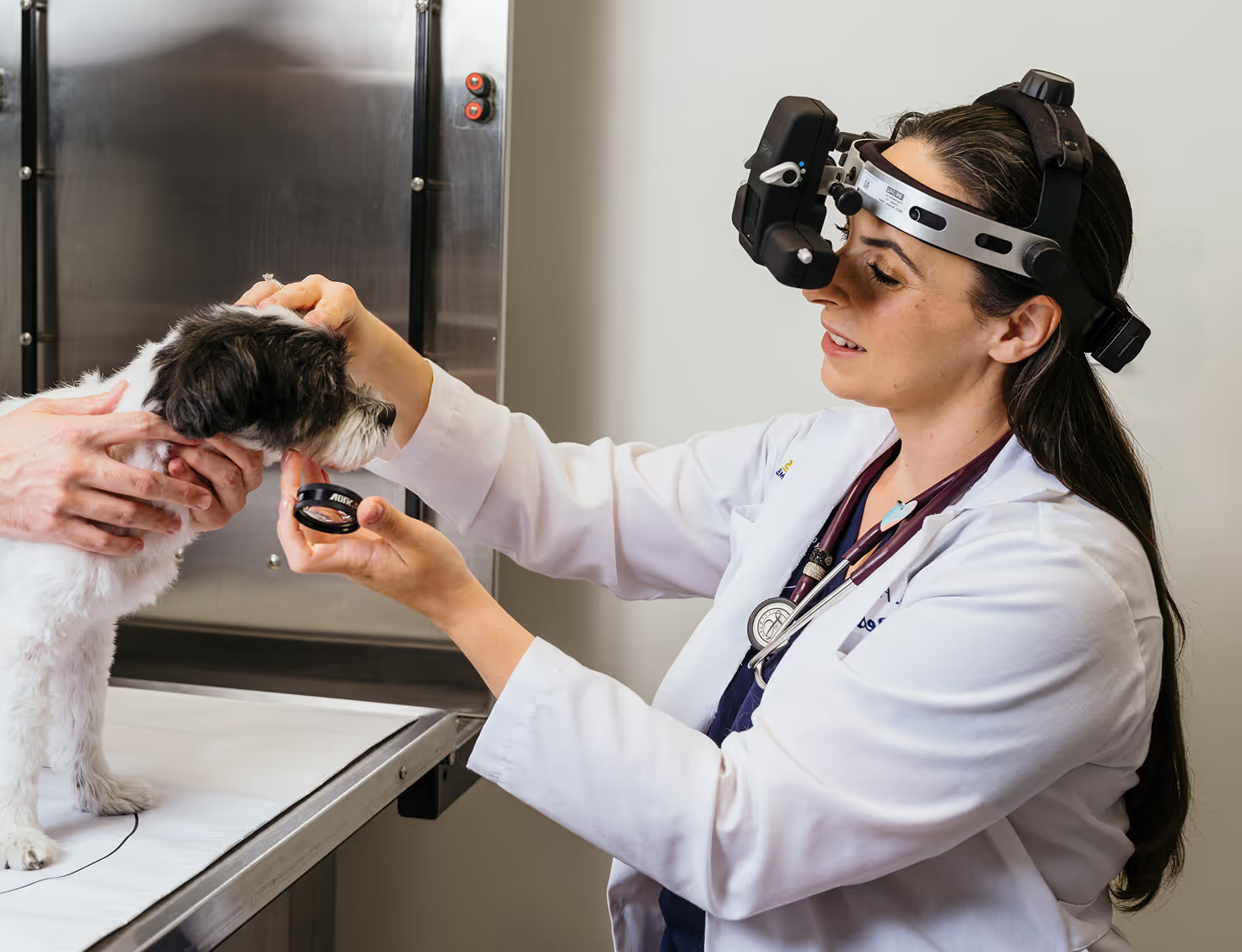
.png)
Understanding the Retina
The retina is the light-sensitive layer of tissue lining the back of the eye. It receives light signals and converts them into electrical impulses that travel through the optic nerve to the brain, allowing your pets to see. When the retina is damaged or no longer functioning properly:
- Light cannot be processed effectively
- Visual signals fail to reach the brain
- Vision becomes impaired or lost
Because the retina plays a critical role in sight, significant damage can result in sudden blindness in pets.
Symptoms of Retinal Disease
Signs of retinal disease in pets may include:
- Sudden blindness or disorientation
- Dilated pupils that do not respond normally to light
- Bumping into objects
- Difficulty seeing in dim lighting
- Hesitation navigating stairs or unfamiliar areas
Since many retinal conditions are not painful, behavioral changes related to vision are often the most noticeable signs.
Retinal Conditions We TreatCommon Retinal Conditions
Several conditions can affect the retina, including:
SARDS (Sudden Acquired Retinal Degeneration Syndrome)
A condition characterized by rapid onset blindness with minimal visible changes to the eye initially. Electroretinography is often required for diagnosis.
Progressive Retinal Atrophy (PRA)
A genetic, degenerative condition that leads to gradual vision loss, often beginning with night blindness and progressing over time. Accurate diagnosis is essential for determining prognosis and management options.
Immune-mediated Retinitis (IMR)
An immune-mediated inflammatory condition of the retina that can cause severe and progression vision loss. Diagnosis with an ophthalmic examination and electroretinogram may allow treatment and improvement in vision
Retinal Detachment
Occurs when the retina separates from the underlying supportive tissue. This can result from high blood pressure, inflammation, trauma, or systemic disease and may cause sudden vision loss.
Advanced Retinal Evaluation
At our Connecticut location, evaluation of retinal disease may include:
- Comprehensive ophthalmic examination
- Ocular ultrasound, particularly if the retina cannot be directly visualized due to cataracts or other opacities
- Electroretinography (ERG), which measures retinal function and helps confirm conditions such as SARDS
- Chromatic Pupillometry, to assess eye function by assessing response to different wavelengths of light
These advanced diagnostics allow us to assess retinal health, determine the underlying cause of vision loss, and guide treatment recommendations.`
Treatment & Prognosis
Treatment and prognosis depend on the specific retinal condition. Some conditions, such as certain types of immune-mediated retinitis, may be treatable if addressed early. Others, including SARDS and progressive retinal atrophy, may not be reversible but can be managed with supportive care and environmental adjustments. Our goal is to:
- Identify any treatable causes
- Address underlying systemic conditions when present
- Provide guidance on long-term care and quality of life
Even when vision cannot be restored, many pets adapt well with appropriate support.