
Lens Conditions in Pets
The lens is a vital part of your pet’s eye, responsible for focusing light onto the retina and helping maintain sharp, clear vision. When this structure becomes damaged or diseased, it can lead to cloudiness, discomfort, or even severe vision loss. At the Veterinary Eye Center - Connecticut, our team specializes in diagnosing and treating a wide range of lens conditions in pets, using cutting-edge imaging, surgical techniques, and compassionate care to improve outcomes and quality of life.
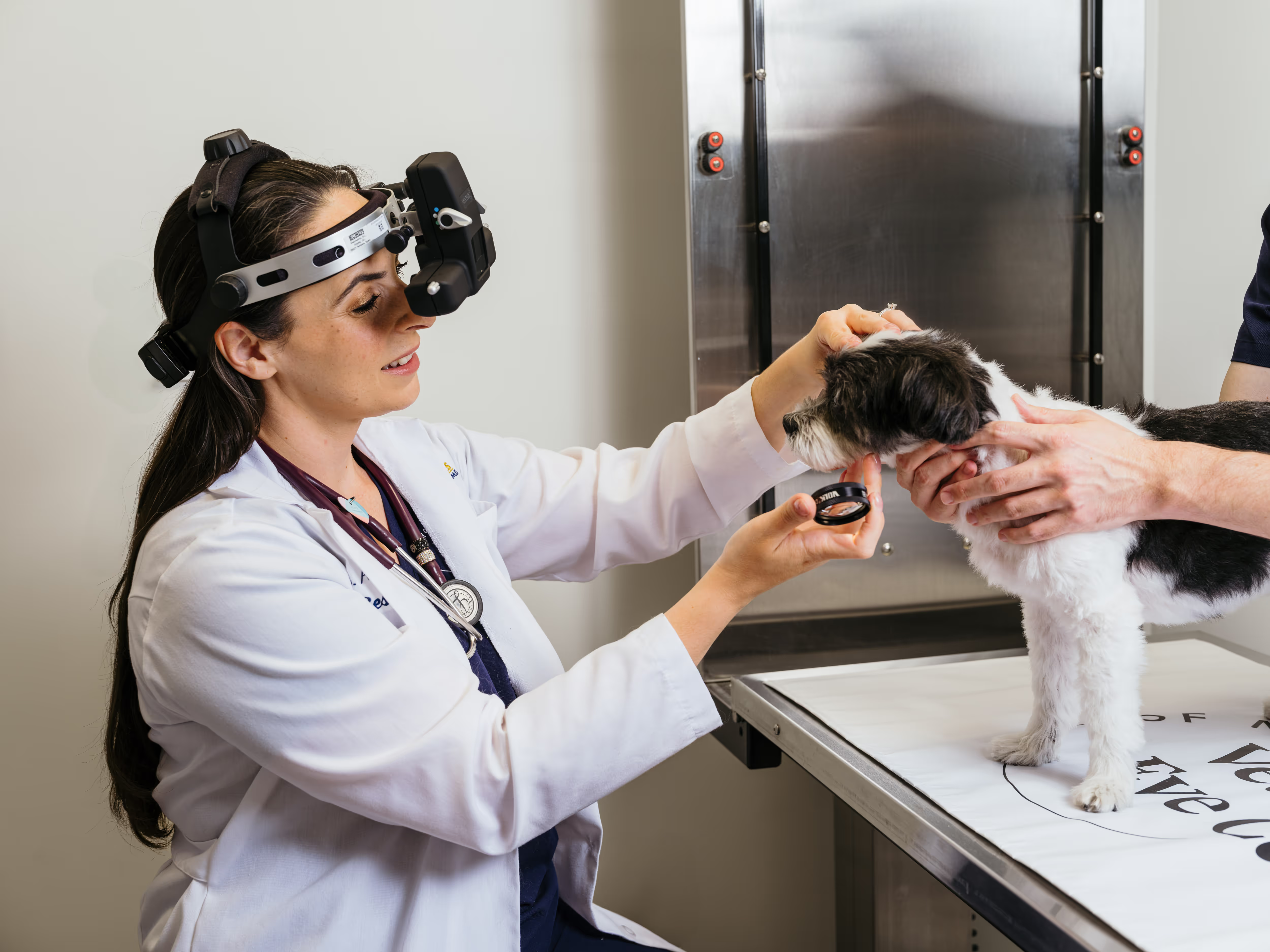
.avif)
Cataracts
Cataracts develop when the normally transparent lens becomes cloudy or opaque, significantly affecting your pet’s ability to see. In many cases, cataracts form gradually, but in pets with diabetes or underlying eye inflammation, they can progress rapidly, sometimes even overnight.
At VEC CT, we treat cataracts using phacoemulsification, the same advanced surgical procedure used in human ophthalmology. Here's what the process looks like.
- Ultrasound energy is used to break up and remove the cloudy lens.
- An artificial intraocular lens (IOL) is implanted, restoring visual function
- Surgery is performed in our state-of-the-art surgical suite, which is equipped for safe, precise, and effective cataract removal.
Our experienced team provides personalized pre-operative evaluations and post-operative care to ensure your pet’s comfort, minimize risks, and support a smooth recovery.
Lens Luxation
Lens luxation occurs when the lens shifts from its normal position, usually due to torn or weakened zonular fibers that hold it in place. This displacement can block normal fluid drainage in the eye, causing:
- Sudden elevation in intraocular pressure (IOP)
- Damage to the cornea or retina
- Acute pain and vision loss
At VEC CT, we diagnose lens luxation using advanced ophthalmic tools and treat it with intracapsular lens extraction (a surgical procedure that removes the displaced lens) or transcorneal lens reduction (a non-invasive procedure to move the lens backward) to:
- Alleviate pain
- Reduce the risk of further damage to ocular structures
- Preserve any remaining vision
Early diagnosis and treatment are critical. Lens luxation is considered an ophthalmic emergency, and we prioritize these cases for urgent evaluation and procedure scheduling.
.avif)